Realtime Product Engineering
A production-informed case study on building live operational workflows around event streams, WebSocket delivery, data freshness, filtering, dashboards, API design, and full-stack ownership across 28K+ live assets.
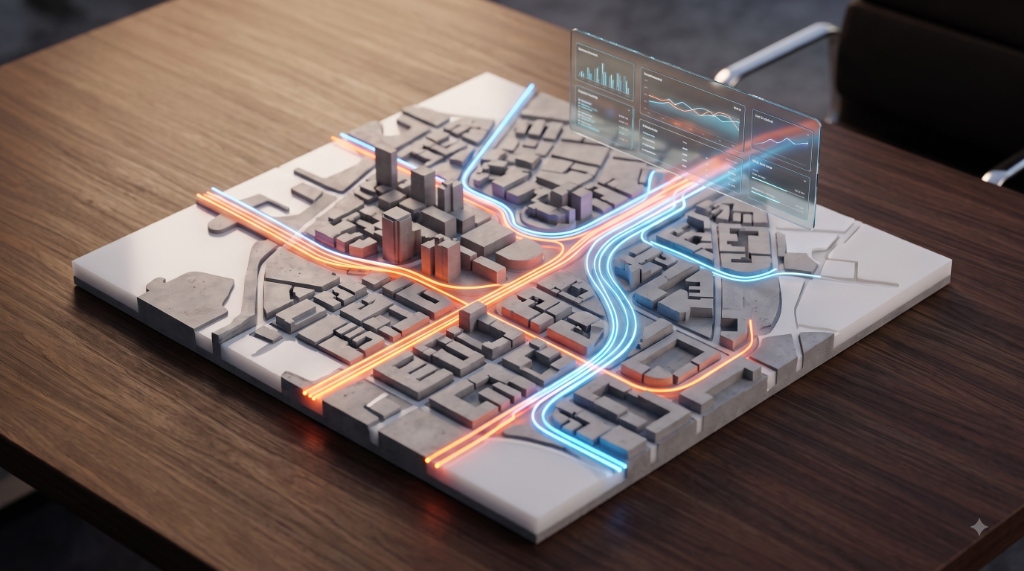
Information Overload
Realtime products can overwhelm users when live data is delayed, stale, missing, or difficult to filter and understand inside operational dashboards.
End-to-End Coordination
I worked across backend data contracts, WebSocket-driven delivery, frontend state, filtering, dashboard UX, and freshness indicators so live data becomes usable.
Operational Clarity
The product experience helped users monitor active entities, understand current state, filter quickly, and act with more confidence across 28K+ live assets.
Realtime workflows I worked around
The common thread across realtime map and live inventory workflows is not only data delivery. The harder part is turning constantly changing data into a product experience that users can understand and trust.
Live map workflows
Worked on realtime map experiences where location updates arrived from an upstream event stream and were pushed to the frontend through WebSocket-based delivery.
Location freshness
Handled product states around fresh, delayed, stale, or unavailable location data so users could understand whether the map reflected current activity.
Live inventory visibility
Worked on admin-facing live inventory/status workflows where users needed to see product or entity status changes without manually refreshing the page.
Operational dashboards
Designed around filtering, scanning, loading states, empty states, and partial failure states so realtime data remained useful under real product usage.
Realtime product flow
At a high level, the realtime flow starts from upstream live events and ends in a user-facing dashboard or map where freshness, filtering, and state clarity matter.
Upstream system produces live telemetry and domain events
Kafka-backed/event-stream service processes and deduplicates updates
Realtime normalization service shapes data into latest product state
WebSocket/API Gateway pushes updates directly to active connected clients
Frontend state store coordinates updates, cache bounds, and map rendering
Users filter, scan, and act on fresh operational data with verified confidence
Architecture decisions behind realtime UX
Realtime product engineering sits between backend systems and user experience. Event streams, WebSocket delivery, frontend state, and freshness UX all have to work together seamlessly.
Event stream to product state
Realtime data is not useful raw. It needs to be normalized into product-friendly state that the UI can render, filter, and explain to users.
WebSocket delivery for live updates
Used WebSocket-style delivery where users needed active updates without repeatedly refreshing or polling every few seconds.
Freshness-aware UX
Designed UI behavior around whether data is current, delayed, stale, missing, or failed so users are not forced to guess the system state.
Frontend state & rendering control
Realtime updates can trigger too many UI changes. The frontend needs controlled state updates, filtering, and rendering boundaries to avoid jank.
Product-friendly API contracts
Backend contracts should expose the right fields for dashboard/map usage instead of forcing the UI to over-process raw backend data.
Graceful failure handling
Realtime systems need clear loading, reconnecting, empty, stale, and partial-failure states because live data will not always arrive perfectly.
What makes realtime UX hard
Realtime interfaces must handle high operational stress, high data volatility, and network instability without degrading into chaos:
Live data freshness
Users need to know whether the data they are seeing is fresh, delayed, stale, or unavailable.
Filtering and scanning
Realtime dashboards become noisy quickly. Filters, grouping, and clear visual hierarchy help users find what matters.
Map and dashboard usability
Live location data is useful only when users can scan the map, understand state, and act without fighting the interface.
Frontend–backend contracts
APIs should expose product-ready data shape so the UI does not have to guess meaning from low-level event payloads.
High-frequency updates
Frequent updates need careful frontend handling so the browser does not re-render too much or make the dashboard feel unstable.
Operational reliability
Realtime workflows need graceful states for loading, reconnecting, missing data, stale updates, and partial failures.
Key trade-offs & engineering decisions
Balancing continuous data flow with browser memory, network stability, and cognitive load:
WebSocket vs polling
Polling is simpler, but WebSockets fit better when users need continuous updates and lower delay. The tradeoff is connection handling, reconnect logic, and more complex state management.
Freshness vs noise
Showing every update can overwhelm the interface. The product needs to show freshness clearly without making the UI feel constantly unstable.
Raw events vs normalized state
Raw events are useful for systems, but users need current product state. The frontend should receive data shaped around the user workflow.
Realtime accuracy vs graceful degradation
When data is delayed or missing, the product should not pretend everything is current. It should clearly communicate stale or partial state.
What I would measure in production
Realtime systems need measurement across both backend delivery and frontend experience. These are the key telemetry signals to track:
Realtime value is not just raw streaming — it is turning volatility into clear, actionable product truth.
Operational products need more than a stream. They require product-ready state, explicit freshness signals, and resilient degradation when reality is imperfect.
Building realtime product workflows?
I’m open to meaningful conversations around live maps, operational dashboards, WebSocket delivery, event streams, freshness UX, and product experiences built around live data.